
Marine Protected Areas
California’s Marine Protected Areas
In 2012, California became the first state in the nation to establish a network of marine protected areas (MPAs) — similar to national parks and forests on land — to protect and restore ocean habitats and increase the health, productivity, and resilience of ocean ecosystems.
This milestone resulted from the 1999 California Marine Life Protection Act (MLPA), which directed the California Department of Fish and Wildlife (CDFW) and the Fish and Game Commission to redesign and improve the state’s system of MPAs. For implementation, California’s 1,100-mile coastline was divided into five regions. In each region, local stakeholders, scientists, and policy experts worked together to determine how best to design that area’s MPAs — ultimately creating over 120 underwater refuges from the Oregon border to Mexico.
Surfrider Foundation’s Role in Establishing California’s MPAs
Surfrider Foundation was an integral part of the MLPA implementation process, particularly in Southern California, where Surfrider staff represented ocean recreation interests, advocated for strong protections, and ensured that the voices of surfers, divers, and coastal communities were heard at the table alongside scientists, fishermen, and policymakers.
Surfrider's engagement included advocating to preserve recreational access areas, protect coastal habitats from pollution and development, and restore ecosystems. The organization's work helped shape an MPA network designed not only for ecological health but for the long-term benefit of ocean-dependent communities across the state.
International Recognition: IUCN Green List
In June 2025, California’s MPA network earned the highest international standard in protected area management: it became the first ecological network in the world to be certified on the IUCN Green List of Protected and Conserved Areas. This followed a seven-year evaluation process conducted by the International Union for Conservation of Nature in collaboration with an expert panel representing marine ecology, fishing, recreation, tourism, and resource management — and more than doubled the number of Green List sites worldwide.
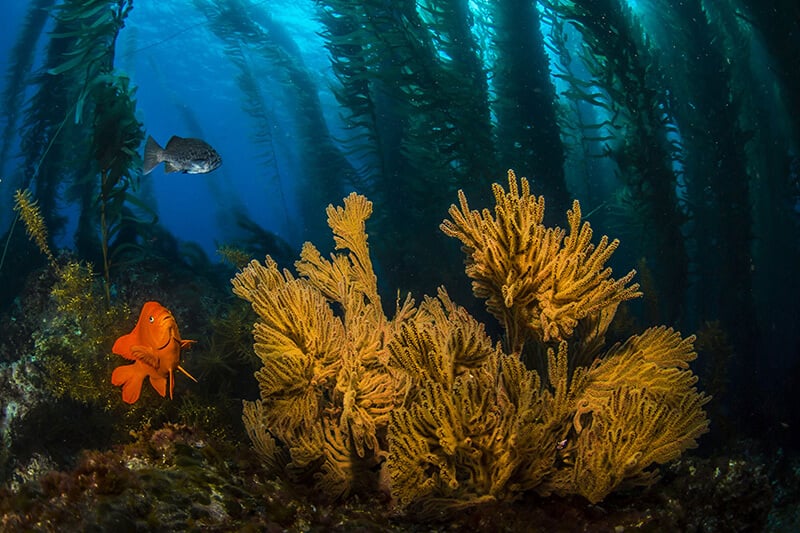
The network’s 124 MPAs cover approximately 16% of state waters and protect diverse coastal and marine ecosystems — from sandy beaches and estuaries to kelp forests and deep underwater canyons — with roughly half designated as fully no-take marine reserves.
The Decadal Management Review
The MLPA requires a comprehensive review of the MPA network every ten years. The first-ever Decadal Management Review was completed in January 2023 and presented to the Fish and Game Commission that February. It evaluated the network’s performance across outreach, research and monitoring, enforcement, and policy — and produced 28 priority recommendations for adaptive management over the next decade.
Crucially, adaptive management under the MLPA framework is intended to use the best available science to strengthen the network’s performance over time — not to justify reductions in protection that are not supported by scientific evidence. At a time when California’s marine ecosystems face accelerating pressure from climate change, including marine heatwaves, shifting species distributions, and habitat loss, MPAs serve as critical refugia. Maintaining strong, durable protections is central to the state’s climate-ready ocean management strategy.
The MPA Petition Process
One outcome of the Decadal Management Review was the opening of a formal public petition process, allowing stakeholders to propose adaptive changes to the MPA network. In December 2023, the Fish and Game Commission received 20 petitions proposing more than 80 unique changes. CDFW evaluated these using a three-phase framework: five near-term petitions (Bin 1) were approved by the FGC in 2025; the remaining 15 longer-term petitions (Bin 2) are still under evaluation, with CDFW releasing assessments of 10 of them in March 2026.
It is worth noting that not all proposed changes are additive. Some petitions before the Commission have sought to reduce existing MPA protections. Consistent with the science-based principles of the MLPA, the effectiveness of California’s network depends on maintaining ecological connectivity, habitat representation, and intact trophic structure across sites. Weakening individual MPAs risks undermining the performance of the whole — and introducing expanded extractive uses within MPAs can create enforcement challenges, user conflict, and regulatory complexity.
Surfrider’s Current Role: Stewardship Over Petitions
At the chapter level, Surfrider volunteers contribute directly through the MPA Collaborative Network, beach cleanups, water quality testing via the Blue Water Task Force, and coastal restoration events — the kind of on-the-ground stewardship that keeps MPAs healthy between policy cycles.
Surfrider Foundation chose not to submit or sign on to a petition in this cycle — a deliberate decision that reflects our priorities. Rather than seeking to change the network’s boundaries or regulations, Surfrider’s focus is on making existing protections work as intended. We support the petition process as a legitimate part of adaptive management, but we believe the most pressing needs for California’s MPAs right now are:
- Effective, consistent enforcement of existing MPA regulations
- Expanded monitoring to track ecological recovery and climate impacts
- Adaptive management grounded in the best available science
- Greater inclusivity for California Native American tribes in MPA stewardship and decision-making
California has demonstrated global leadership through the design and implementation of this network. Maintaining that leadership requires sustained commitment to science-based decision-making and long-term ecosystem protection — not rolling back hard-won gains.
At the chapter level, Surfrider volunteers contribute directly through beach cleanups, water quality testing via the Blue Water Task Force, and coastal restoration events — the kind of on-the-ground stewardship that keeps MPAs healthy between policy cycles.
Resources