
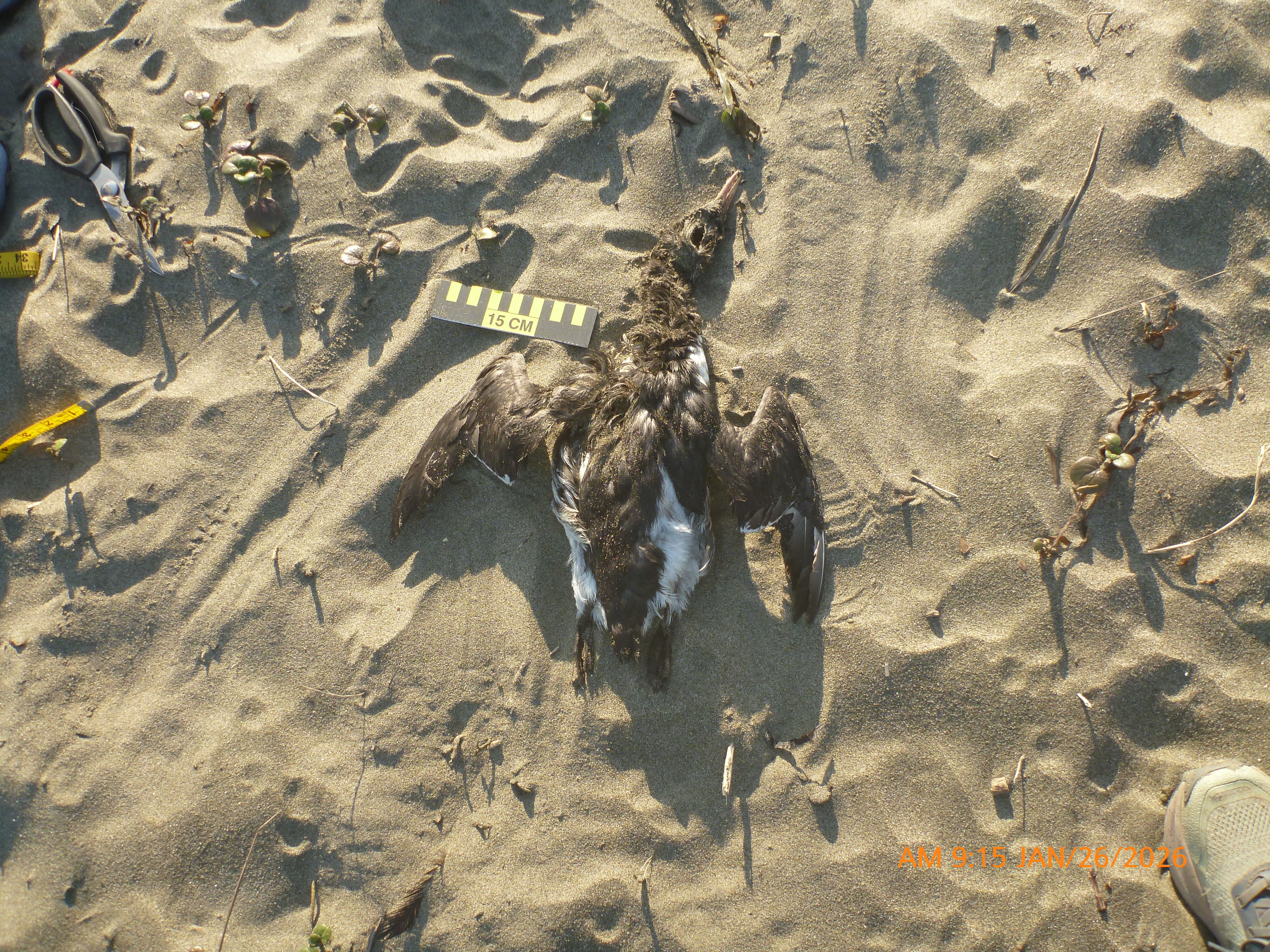
When walking along the beach, it’s common to come across the usual signs of a dynamic coastline—driftwood, shells, wrack lines, and the footprints of early morning visitors. Even some trash is typical and expected, despite our repeated efforts.
Time spent on the shoreline can also bring more sobering encounters. In recent weeks, beachgoers across California have reported finding sick or deceased seabirds along the beaches, which has sparked concern over the health of our ocean and our wildlife.
A deceased common murre found on a beach in Northern California
The California Department of Fish and Wildlife (CDFW) and other agencies and research institutions have been investigating the mortality event to understand the underlying causes, which have been impacting species such as cormorants, murres, and pelicans. Here is what we know so far:
Avian Influenza
Avian Influenza (H5N1) was first recorded among wild birds in California in 2022 and has been monitored since. The spread of avian influenza has been a major concern as this event has unfolded. To assess its role, the CDFW has collected and tested deceased seabirds from across the state.
So far, results suggest that avian influenza is not a primary driver of this mortality event in seabirds. Of the 89 birds tested, only two (both from San Francisco County) returned positive results.
That said, concern around the virus remains high due to its ability to spread to marine mammals. Positive cases have been documented in marine mammals, including California sea lions and elephant seals in San Luis Obispo, Santa Cruz, Monterey, and San Mateo counties, as well as a southern sea otter in San Mateo County. These cross-species detections highlight the importance of continued monitoring and caution as scientists work to better understand how the virus is moving through marine ecosystems.
For the most up-to-date information, see UC Davis Outbreak Updates.
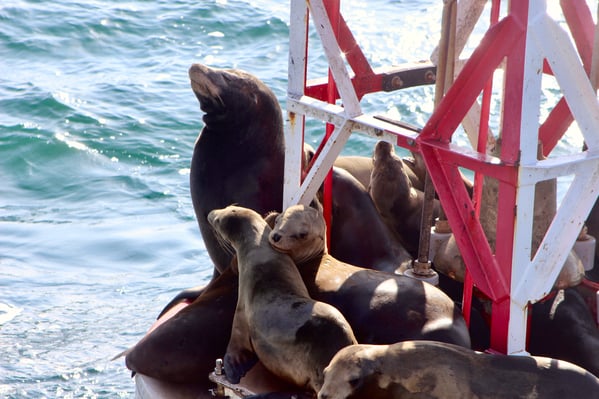 California sea lions resting on a buoy in Southern California
Starvation
The CDFW has determined that starvation is most likely the leading cause of the seabird mortality event.
According to CDFW, species like cormorants, common murres, and brown pelicans had an unusually strong breeding year in 2025, resulting in a large number of young birds entering the population. While that is good news, it often leads to higher mortality rates, especially among juveniles.
These challenges are compounded by changing ocean conditions. Warmer waters, like what we have been experiencing this spring, can push prey fish deeper in the water column, making them harder for seabirds to reach. For younger, less experienced seabirds in particular, this combination of limited access to food and environmental stress can significantly reduce their chances of survival.
Events like this are a reminder that ocean health underpins the entire food web. As climate change reshapes ocean conditions, altering where and how marine life can survive, those impacts ripple from plankton to fish to seabirds and beyond. At the same time, the health of wildlife is closely linked to our own, and issues like avian influenza highlight how diseases can move across species and ecosystems.
How Can You Help?
Surfrider chapters host events along the coast nearly every weekend, meaning we can serve as consistent eyes and ears on the shoreline, documenting changes, identifying emerging issues early, and mobilizing our community to respond in the following ways:
- Report stranded seabirds: Call your local wildlife rehabilitation facility
- Report dead seabirds: Community members can report dead wildlife to CDFW’s Wildlife Health Laboratory using the mortality reporting form, which helps biologists monitor the event. Please include photos if possible.
- Support a local wildlife rehabilitation facility: Contact the permitted wildlife rehabilitation facility near you intaking seabirds directly for how best to assist.
- Report marine mammals: To report a dead, injured or stranded marine mammal in California, call the NOAA Fisheries West Coast Region Stranding Hotline: (866) 767-6114. Information on species and regional stranding contacts may be found on the NOAA Fisheries website.
- Please DO NOT touch or collect dead, sick, or injured animals, and please DO keep your pets away from them.
Citations & Resources:
- California Department of Fish and Wildlife: CDFW Finds Starvation to be Primary Cause of Increased Mortalities in California Seabirds
- UC Davis H5 Influenza A Outbreak in Marine Mammals
- Avian Flu in Elephant Seals at Año Nuevo with Patrick Robinson
- International Bird Rescue: How you can prevent the spread of avian influenza