
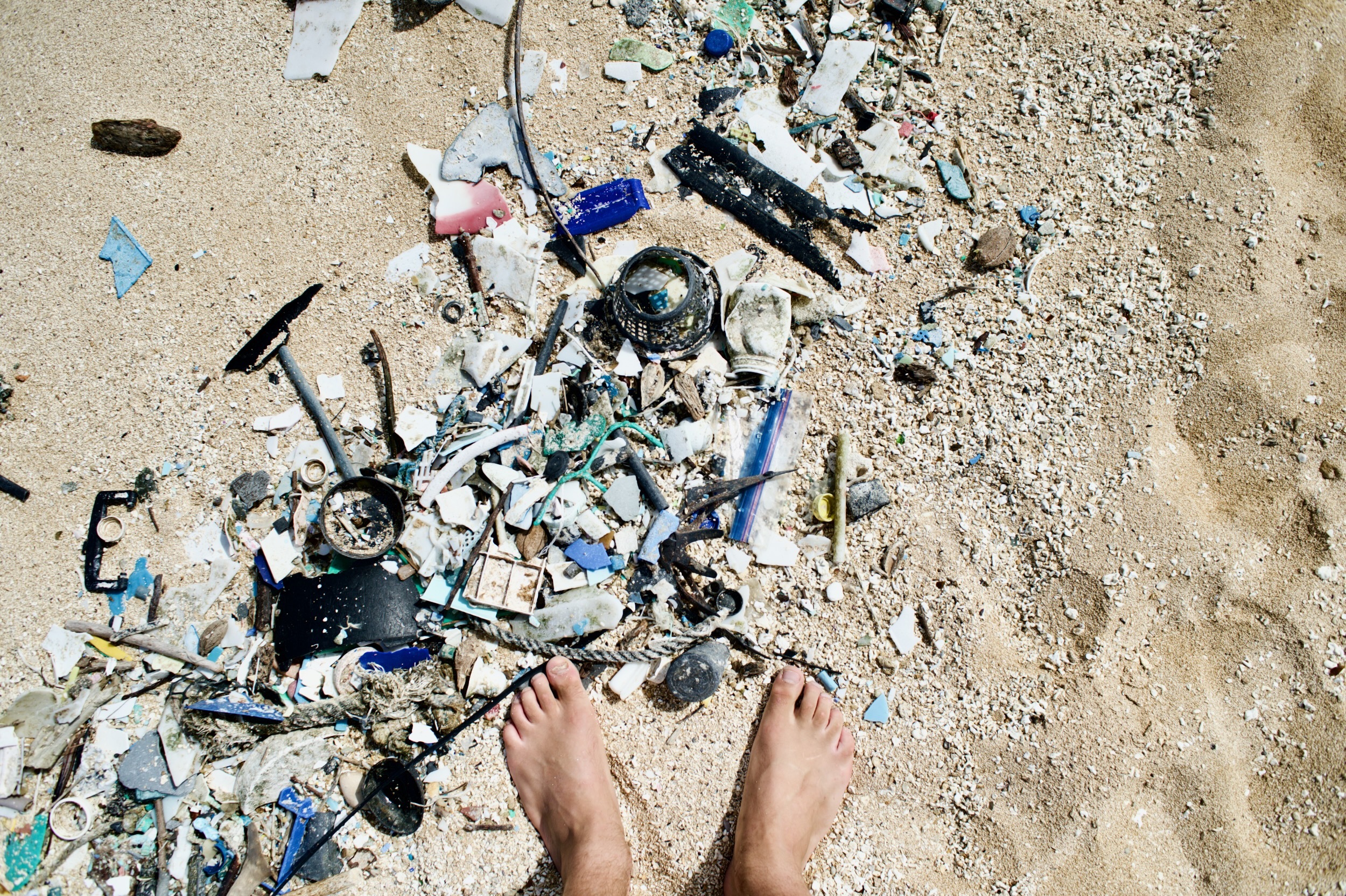
California’s legislative session ended on August 31, 2026—but the fight over one of the nation’s most ambitious plastic pollution laws continues.
Despite years of work to implement the Plastic Pollution Prevention and Packaging Producer Responsibility Act (SB 54), industry opponents have continued efforts to weaken, delay, and repeal the landmark law.
Passed in 2022, SB 54 requires a 25% reduction in single-use plastic packaging and food service ware by 2032 and requires covered packaging and plastic food service ware to be recyclable or compostable. The law also shifts responsibility for the impacts of plastic packaging toward the producers that create and sell these products.
What’s Happening With SB 54?
After years of meetings, workshops, and public input, California’s permanent SB 54 regulations were approved by the Office of Administrative Law and took effect on May 1, 2026.
The next major step is implementation.
On June 15, 2026, the Producer Responsibility Organization (PRO), Circular Action Alliance (CAA), submitted its draft Producer Responsibility Organization Plan to the SB 54 Advisory Board. The Plan provides the framework for how CAA will implement the law and help producers meet its requirements. They now have until October 13, 2026, to review and incorporate comments before the Plan is finalized.
Overall, Surfrider believes that the PRO plan needs more emphasis on moving away from materials, formats, and product designs that are difficult to recycle, and less emphasis on finding ways to recycle these hard-to-recycle items. For example, Surfrider opposes the phase-in approach to achieve compliance for expanded polystyrene foam and believes the state should prioritize eliminating problematic materials rather than developing new ways to manage them.
Surfrider also continues to advocate for the removal of pyrolysis from consideration as a non-mechanical recycling technology with a compliance pathway under the Plan. Environmental Justice organizations have been clear and vocal in calling for all forms of chemical/advanced recycling to be prohibited, yet these technologies remain under consideration in the PRO Plan. These processes can emit harmful pollutants, including polycyclic aromatic hydrocarbons (PAHs), volatile organic compounds (VOCs), carbon monoxide (CO), and nitrogen oxides (NOx), as well as greenhouse gas emissions.
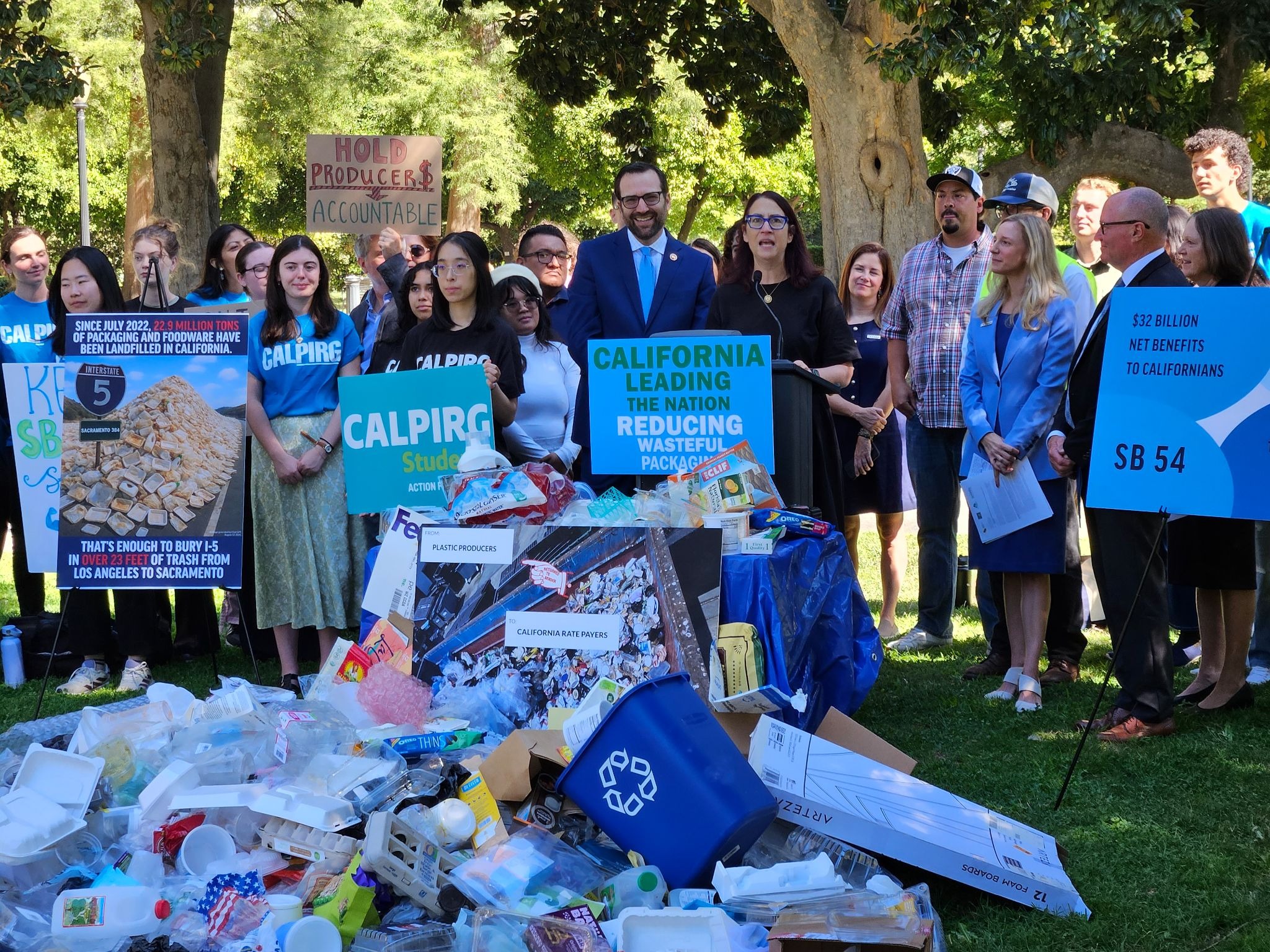
SB 54 press release urging Governor Newsom to uphold CA’s landmark plastic packaging law (Image Credit: Andy Smith)
Leaked Internal Memos Reveal Coordinated Industry Push to Weaken SB 54
As implementation moves forward, industry opposition has intensified.
A recent Los Angeles Times article reported on internal industry documents describing a coordinated campaign to pause or repeal SB 54. The campaign involves the coalition Californians for Affordable Packaging, which has advocated for pausing and replacing the law and has raised concerns about its potential costs.
Weakening SB 54 would not make the costs associated with plastic pollution disappear. Instead, responsibility for those costs could continue to fall on local governments, taxpayers, ratepayers, communities, and families that currently bear the financial and environmental consequences of plastic waste.
The Plastic Pollution Mitigation Fund: A $5 Billion Opportunity
One of the most important—and potentially transformative—parts of SB 54 is the California Plastic Pollution Mitigation Fund (PPMF). PPMF is a $500 million annual investment for 10 years starting in 2027, funded by plastic producers and designed to address the environmental and public health harms caused by the full life cycle of plastics.
The fund represents an important opportunity to invest in communities and solutions that can prevent plastic pollution at its source, restore ecosystems, and address the disproportionate impacts of plastic pollution.
That’s where SB 1180 comes in.
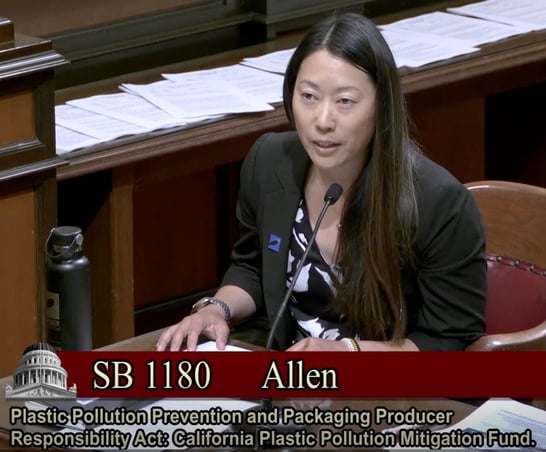
Miho Ligare, Surfrider’s Plastic Pollution Initiative Senior Manager, testifies in support of SB 1180 during the Senate Environmental Quality Hearing
How You Can Help: Support SB 1180
SB 1180, establishes additional requirements and guidelines for how California’s Plastic Pollution Mitigation Fund (PPMF) should be spent. The bill would help ensure that investments support public and environmental health, prioritize communities disproportionately affected by plastic pollution, and fund projects that reduce, prevent, or remediate plastic waste and microplastics.
SB 1180 passed the Legislature and was presented to Governor Newsom on September 9, 2026.
The core elements of this bill incorporate principles and ideas that were developed through a year-long effort by environmental justice groups and their partners to envision the most effective way to invest the PPMF.
Surfrider supports using the PPMF to advance long-term, community-driven solutions to plastic pollution. Potential investments could include:
- Community-driven stormwater infrastructure projects that capture plastic pollution before it reaches waterways and ecosystems.
- Development and implementation of local zero-waste plans.
- Projects addressing plastic pollution in the Tijuana River Watershed.
- Research into the impacts of plastic pollution on traditional foods and culturally significant species.
- Programs that support communities, Tribes, and workers disproportionately affected by the plastic lifecycle.
By establishing clear criteria for how PPMF dollars are invested, SB 1180 can help ensure that this unprecedented funding supports lasting solutions—not simply short-term cleanup.
Take Action
California has an opportunity to fundamentally change how we address plastic pollution: reduce unnecessary plastic at the source, make producers responsible for the waste they create, and invest in communities that have borne the greatest burden of plastic pollution.
But implementation matters.
Please take action and urge Governor Newsom to sign SB 1180 into law, among a suite of bills that Surfrider is advocating for. Your voice can help ensure that California’s $5 billion Plastic Pollution Mitigation Fund delivers meaningful investments in pollution prevention, environmental health, and community-driven solutions.
The governor’s deadline to act is September 30, 2026.
Header image: Morgan Maassen
 Miho is the Plastic Pollution Initiative Senior Manager. She has a Masters in Environmental Science and Management from the University of California, Santa Barbara, and served as a California Sea Grant State Fellow for the California Natural Resources Agency.