
The Commission met in Oceanside October 7-9 and tackled a busy agenda that included the fallout from last month’s Hurricane Marie swells, LCP Updates for the cities of Carlsbad and Pismo Beach, and more. As always, your California policy team was on-site to advocate on behalf of our state’s ocean, waves, and beaches.
Let's dive in!
Emergency Armoring Run Amok in the OC
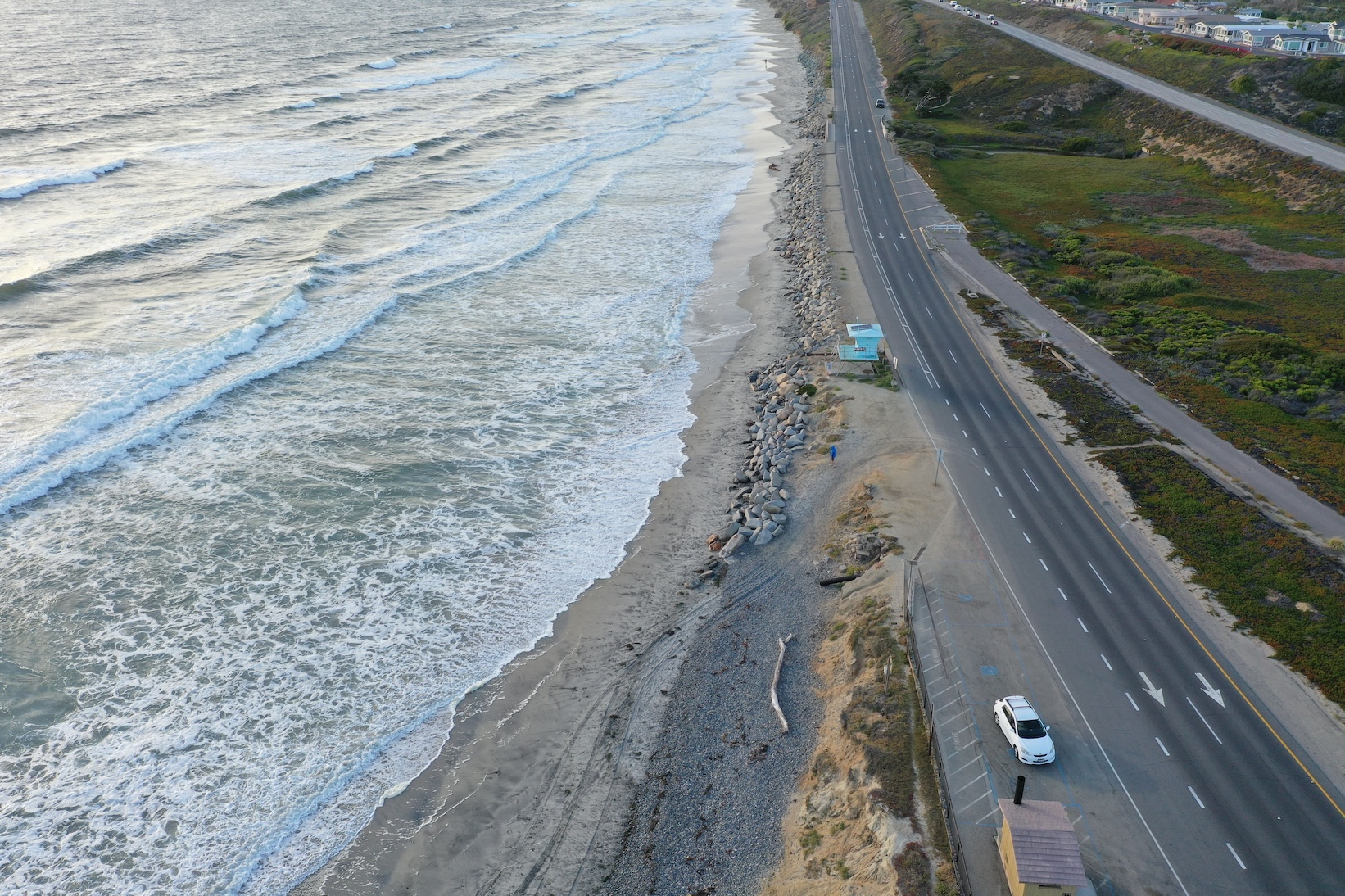
Wednesday’s Orange County Deputy Director’s Report contained more than 30 emergency permits for coastal armoring. Most were for properties on Beach Road in Dana Point, where the Commission and property owners have been at odds over resilience planning for years. In San Clemente, up to 15,000 more tons of boulders were approved to protect the rail corridor, where 27,000 tons of previously placed emergency rock is already failing and a large stretch of public beach has been lost as a result.
Twenty-two people commented in opposition to OCTA’s continued emergency armoring and the loss of public beach that has come with it. Together, the comments made a clear case: armoring is failing to protect the tracks while destroying the beach, and sand on the beach is the only way to protect the rail in the near term. Surfrider joined the chorus, also questioning whether the rail corridor will last through the winter, let alone the 30 years OCTA has planned for. The follow-up CDP for all of OCTA's emergency armoring since 2021, as well as additional armoring requests, will come before the Commission at the November meeting. A recent Surfrider blog post details the damage done and provides recommendations for a better way forward.
Emergency permits are issued by staff without a vote, but Commissioners still expressed concern and engaged with Executive Director Huckelbridge on the issue. Commissioner Escalante worried that too many coastal communities don’t understand beach dynamics, and decried years of vehement local pushback against long-term adaptation planning that has led to this onslaught of emergency permits. She fears the Commission will eventually buckle under the weight of emergency requests as sea levels rise. Commissioner Jackson asked “what’s really an emergency” when the problem is foreseeable and has been studied for years. Surfrider agrees on both counts!
Muddying the waters further is Governor Newsom’s September 21 El Niño State of Emergency declaration, which directs the Commission to expedite review of developments that prepare for El Niño impacts and to act within 24 hours in urgent situations. A stronger declaration could go further and suspend the Coastal Act entirely, eliminating its already-thin safeguards against emergency armoring. Ahead of an October 16 deadline for the state’s environmental and natural resources agencies to advise the Governor on whether further action is needed, Surfrider submitted a letter opposing any suspension of the Coastal Act for “manufactured emergencies” caused by failure to plan for foreseeable events. The letter also asks for resources to prioritize softer near-term solutions and longer-term sea level rise planning.
Missed Opportunities in Carlsbad's LCP Update
Thursday’s main event was the City of Carlsbad’s LCP Update, which included a controversial rezone of Planning Area F at Ponto, one of two remaining undeveloped coastal parcels where coastal recreation could relocate as sea levels rise. More than 90 people signed up to speak, all but one in opposition. Carlsbad residents have long sought a coastal park there, but the land is privately owned and the City has never attempted to acquire it.
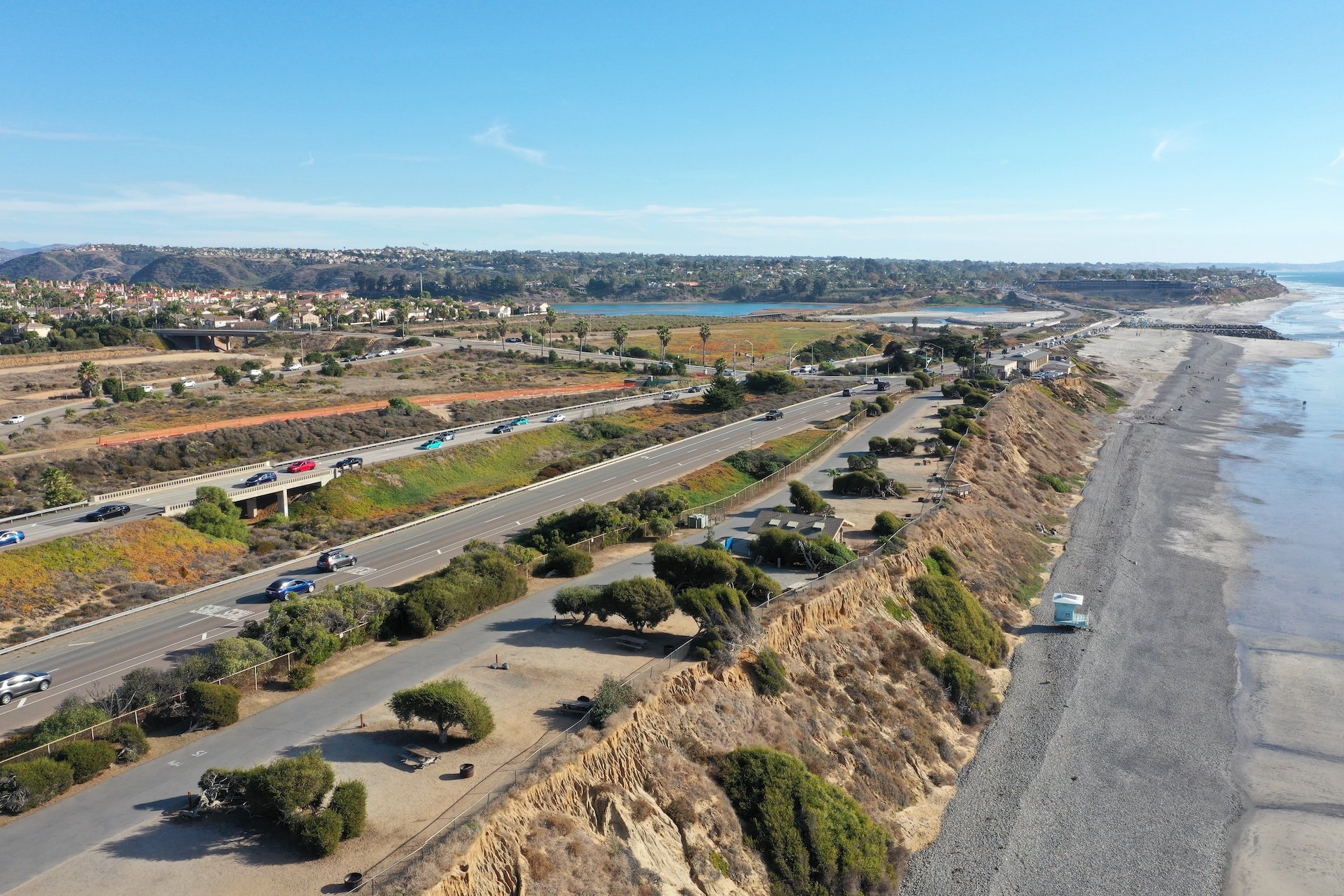 Carlsbad’s last remaining coastal open space is now rezoned for development
The Commission voted 7-4 to approve the update with modifications, including a complete overhaul of the City’s 1996 Land Use Plan (LUP). The new LUP sets strong rules for individual projects, including limiting seawall eligibility to structures built before 1977 and requiring permitted seawalls to be reviewed every 20 years. However, it defers citywide sea level rise adaptation planning to 2034, the latest date state law allows, even though the City completed an adequate Sea Level Rise Vulnerability Assessment in 2017.
Surfrider expressed concern over the missed opportunity to set affirmative policies for the landward realignment of Carlsbad Boulevard, which would create space for beaches and visitor-serving accommodations to adapt to sea level rise. The LUP only commits to “considering” and “evaluating” these opportunities. Surfrider also supported keeping Planning Area F in low-intensity use to preserve options for realigning the road and relocating the South Carlsbad State Beach campground, the City’s largest source of lower-cost coastal overnight accommodations. Instead, the rezone allows 120 rental homes with 24 affordable units, all but foreclosing those options. Commission and City staff negotiated a small sea level rise buffer on the site, but it is nowhere near enough for road or campground relocation.
Surfrider also opposed allowing Carlsbad to fulfill their affordable overnight accommodations within other parts of San Diego County, which raises environmental justice concerns by allowing the City to export low-cost accommodations to less desirable areas while Carlsbad's coast becomes more exclusive.
Commissioners Hart, Wilson, Smith, and Harmon voted no, siding with the public and citing the loss of open space where coastal recreation could relocate inland. They were outvoted by the remaining Commissioners, several of whom voiced support for the proposed housing. The core failure was at the City level, where neither City staff nor a Council majority ever pursued acquiring the site for public use.
Opposition to Carlsbad's 10-year Emergency
Surfrider also weighed in on a separate Carlsbad emergency armoring permit, where the City has studied a viable managed retreat option but hasn’t yet mustered the political will to commit. Instead, it has relied on multiple rounds of emergency boulders to protect a road that can be moved. Surfrider’s San Diego County Chapter has been a vocal cheerleader for prioritizing the project, supporting the City’s early progress while leaning on the Commission to hold the City to its commitments.
When the City formalized its first round of emergency armoring in 2018, it agreed to follow up with a long-term hazards management plan that preserves the beach and public access to it. The City has twice sought to extend that deadline, most recently in July. Surfrider successfully objected to treating that extension as “immaterial,” so it now requires a full hearing, where the Commission can add conditions and require mitigation for beach lost to armoring. At the time, we correctly predicted the City would be back for more emergency armoring soon. Like Commissioner Jackson the day before, Commissioner Hart objected to using emergency permits for clearly foreseeable problems.
Sufrider's presentation and comments, plus Commission discussion
A Solid LCP Update for Pismo Beach
On October 9, the Coastal Commission approved a solid Phase 1 Land Use Plan update from Pismo Beach. Like Carlsbad, the City deferred its sea level rise and coastal hazards policies to a later phase (state law requires sea level rise planning by 2034). But unlike Carlsbad, Pismo’s update strengthened protections for beaches and open space without a controversial rezone that shuts the door on an important future coastal adaptation opportunity.
Surfrider’s comment letter supported the update’s new policies keeping development off the sandy beach, protecting beach parking, and preserving lower-cost lodging, and urged the Commission to require new shoreline development to waive any future right to seawalls. The Commission did not adopt that change, and Surfrider will pursue it in the City’s Phase 2 update, where the City will need to make harder decisions about how to adapt to rising seas. Prior to the hearing, Surfrider’s San Luis Obispo (SLO) Chapter secured language ensuring the City’s outreach will reach both environmental justice communities and the non-residents who enjoy Pismo Beach.
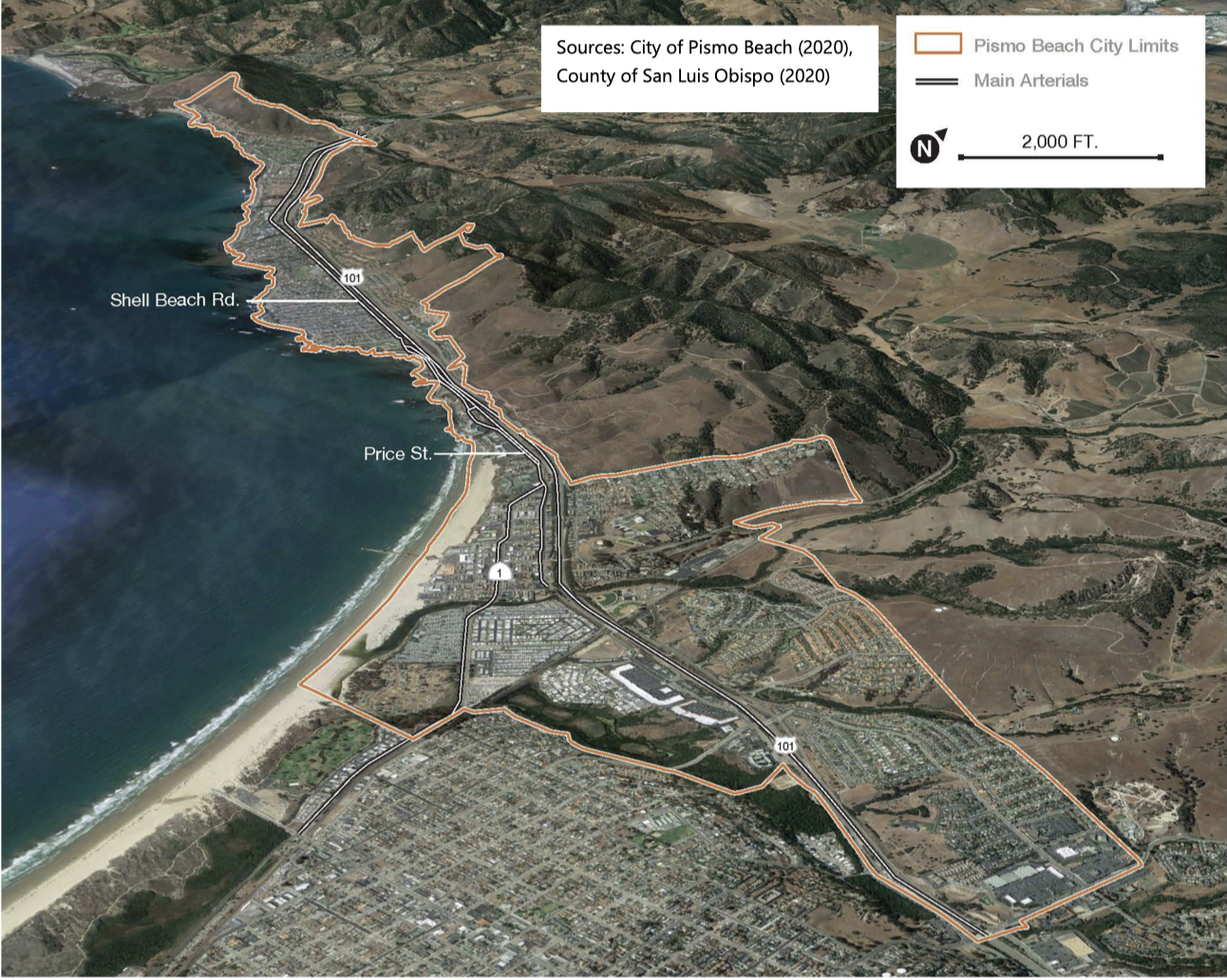 Pismo Beach city limits
The City is currently working at the local level on its Phase 2 update (coastal hazards, sea level rise adaptation). Surfrider encourages interested Pismo residents and beachgoers to sign up for City updates HERE, and to get involved with the San Luis Obispo Chapter, where volunteers remain engaged in the process.
More at ActCoastal
If your thirst for Commission updates remains unquenched, check out our ActCoastal October Report for an even deeper dive into these key votes, meeting highlights, and more. ActCoastal is a coalition Coastal Commission accountability project that tracks every meeting, and scores important votes as either Pro-Coast or Anti-Coast.
 Mitch served in various volunteer leadership positions with the San Diego Chapter before being hired on as Chapter Manager in 2018. In 2022, he transitioned to the chapter’s policy role. In 2025, he's broadened his scope as California's Senior Policy Coordinator.