
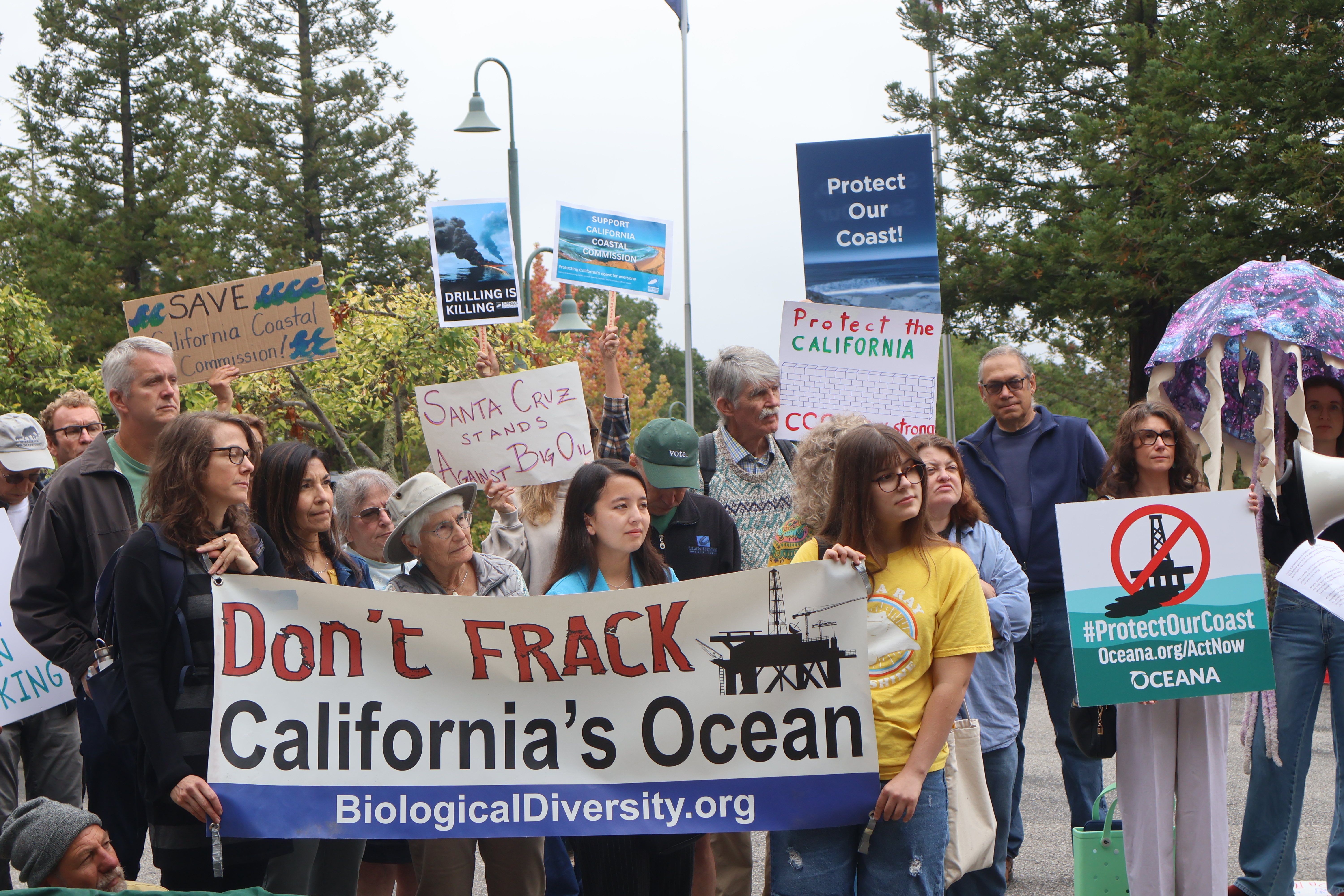
The Coastal Commission convened in Scotts Valley from August 12-14 to tackle the most packed and consequential agenda of the year. The Commission continues to mark the Coastal Act’s 50th anniversary by expanding its record of protecting our coast.
Let’s get into the highlights.
No Fracking Way, DCOR
At Thursday's main event, the Commission delivered a resounding victory to the California coast with a unanimous objection to the first offshore fracking project ever proposed off our state. Coastal advocates rallied behind staff's recommendation to object to DCOR's proposal for deep sea fracking off its aging platform in the Santa Barbara Channel. Other than DCOR's representative, not one person spoke in support. The Commission received more than 3,000 correspondence items from Tribal, environmental, and community organizations and from individuals, all opposing the project or offshore oil expansion. This comes as no surprise, given the threat another oil spill would pose to our marine ecosystems, fisheries, beaches, and thriving coastal recreation economy.
Both Surfrider staff and members worked in coalition to support the Commission’s decision to object to this disastrous proposal. Our California Offshore Oil Campaign Manager and Policy Associate Director attended the hearing and spoke at a rally that morning. Thanks to a call to action issued by the Santa Barbara and Ventura chapters, many members and volunteers spoke as well or submitted written comments in support of keeping fracking off our coast.
A social post from the Ventura County and Santa Barbara chapters
The objection comes as the Trump Administration tries to strip the agency's authority to weigh in on projects in offshore federal waters, like this one. It's a powerful reminder of how the Commission stands up for our coast. Most Californians oppose offshore drilling, and the Commission gives them a voice in federal decision-making. Your entire Surfrider California network has been working hard to ensure the voice of the people is heard loudly and clearly in Washington, D.C. Hands off California’s coast!
More analysis on the DCOR objection can be found at ActCoastal.
California Love for Coastal Protection
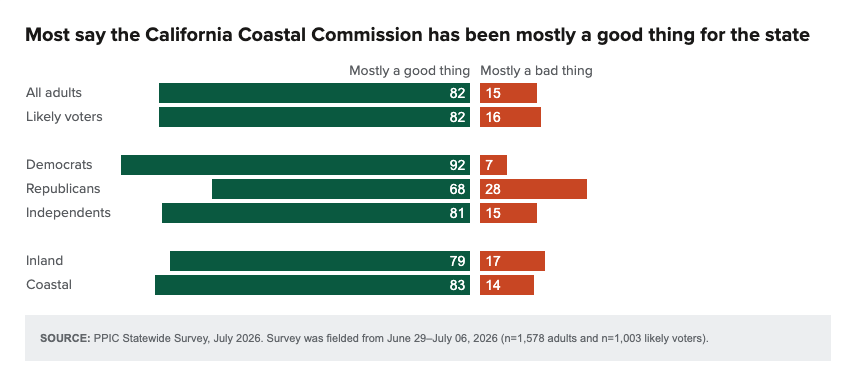
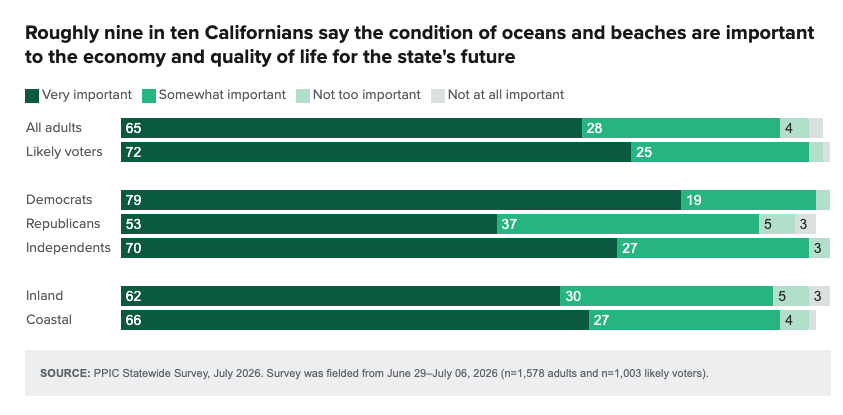
During her monthly report, Executive Director Kate Huckelbridge reported on the August 10 NOAA hearing in Santa Monica, where she and hundreds of other coastal advocates testified in defense of the Commission's record reviewing federal projects under the Coastal Zone Management Act. She also highlighted findings from a July 2026 poll by the non-partisan Public Policy Institute of California showing that 82% of Californians believe the Coastal Commission has been good for the state. Even if the state's 39 million residents agreed on nothing else, they agree on this!
Monterey County Beach Resort to Yield Strong Public Benefits
On Wednesday, the Commission unanimously approved a condominium hotel on an industrially degraded stretch of beach in Sand City. Staff negotiated a strong public benefits package and strict anti-armoring conditions.
Surfrider would prefer not to see development over sand dunes. Still, this is a compelling example of how Commission involvement makes an unavoidable project better than it would have been. In 2013 the City approved a much larger hotel across eleven and a half acres of this site, covering more than 60 percent of the undeveloped dune. After years of on and off negotiations with the developer, what the Commission approved covers only two and a half acres, restores the rest, and deeds it permanently back to the public.


Conditions secured managed retreat of a roadway, industrial cleanup, dune restoration, and a completed Coastal Trail. They also locked in permanent protections and a hard no on future armoring. If coastal hazards threaten the resort in the future, the owners are required to remove all vulnerable sections and restore the beach rather than armor. Additionally, an adjacent 25-site “tent cabin” campground will satisfy the Commission’s low-cost overnight accommodations requirement.
Your Surfrider policy team supported these strong conditions, also asking the Commission to require financial assurance so the money for future removal actually exists. The Commission has not required this in the past and did not impose it here. But staff confirmed they are looking into such requirements for future developments.
Check ActCoastal for more details on this decision.
Stinson Beach Parking Lots to Get Nature-Based Makeover
In Stinson Beach, the Commission concurred with the National Park Service's proposal to use nature-based adaptations to shield beach parking lots that are routinely inundated by winter storms. NPS is pulling the most vulnerable sections of the parking lot back to restore sand dunes and native habitat, along with widening the floodplain along Easkoot Creek. The tradeoff is a 10% reduction in parking spots, from 750 to 680 spaces, a loss this small community will feel when summer crowds peak. But nature-based adaptation avoids hard armoring, which would compromise the very stretch of beach the parking lot serves. Surfrider supported the proposal.
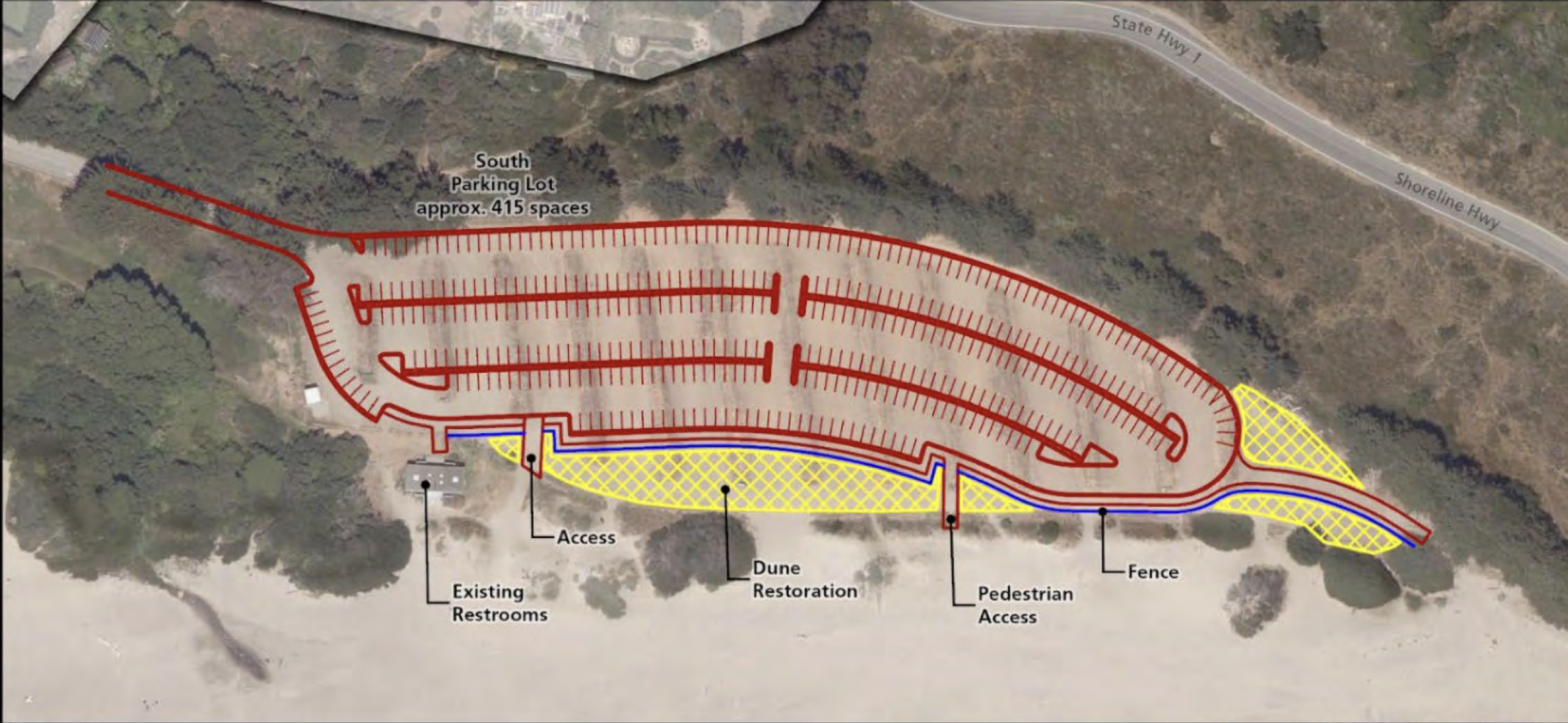 Restored dunes will help protect the south parking lot
Clearing the Way for Mission Bay Wetland Restoration
On Friday, the Commission approved staff’s modifications to San Diego's plan to restore 262 acres of wetlands in the northeastern corner of Mission Bay. Commission staff strengthened the City's already ambitious plan, which balances wetland restoration with retention of recreational amenities including a coastal campground. The LCP amendment marks a significant win for the City and the ReWild Mission Bay coalition, led by the San Diego Bird Alliance (formerly Audubon) and comprised of more than 100 local environmental and civic groups.
More at ActCoastal
For a deeper dive into key votes from the August Commission meeting, check out the ActCoastal August Report. ActCoastal is a coalition that holds the Coastal Commission accountable by tracking each meeting and scoring important votes as either Pro- or Anti-Coast. It’s a pleasure to report no Anti-Coast votes this month!
 Mitch served in various volunteer leadership positions with the San Diego Chapter before being hired on as Chapter Manager in 2018. In 2022, he transitioned to the chapter’s policy role. In 2025, he's broadened his scope as California's Senior Policy Coordinator.